Why cracks matter
Asphalt expands in the heat and contracts as it cools, and with age and traffic it cracks. On Oahu, heavy rain then pushes water through those cracks into the base, where it softens the support under the pavement.
Crack sealing fills the crack with a rubberized material that stays flexible, so it moves with the pavement and keeps moisture and debris out.
Why Oahu Asphalt
- Rubberized hot-pour sealant
- Made for heat and heavy use, not a cold filler from a jug.
- Cracks cleaned first
- Sealant only sticks to a clean, dry crack, so prep is not skipped.
- Fast, low disruption
- Most properties are back open the same day.
- Pairs with seal coating
- Sealing cracks first is what makes a seal coat last.
What the work includes
- Surface preparation
- Mark the cracks, clean out vegetation and debris, and make sure they are dry.
- Routing, if specified
- Widen and deepen cracks to form a reservoir for the sealant, then clear loose debris.
- Sealing
- Heat and apply hot-pour rubberized asphalt sealant, filling from the bottom up and leveling it flush.
- Finishing and curing
- Let the sealant set before reopening, with blotter sand if needed.
- Cleanup
- Remove debris, equipment and excess material.
How it goes
Inspect and clean
Dirt, weeds and debris come out of the cracks.
Prepare the crack
Cracks are widened and cleaned where that improves adhesion.
Apply sealant
Hot-pour rubberized material fills and seals.
Finish and check
The surface is smoothed and inspected.
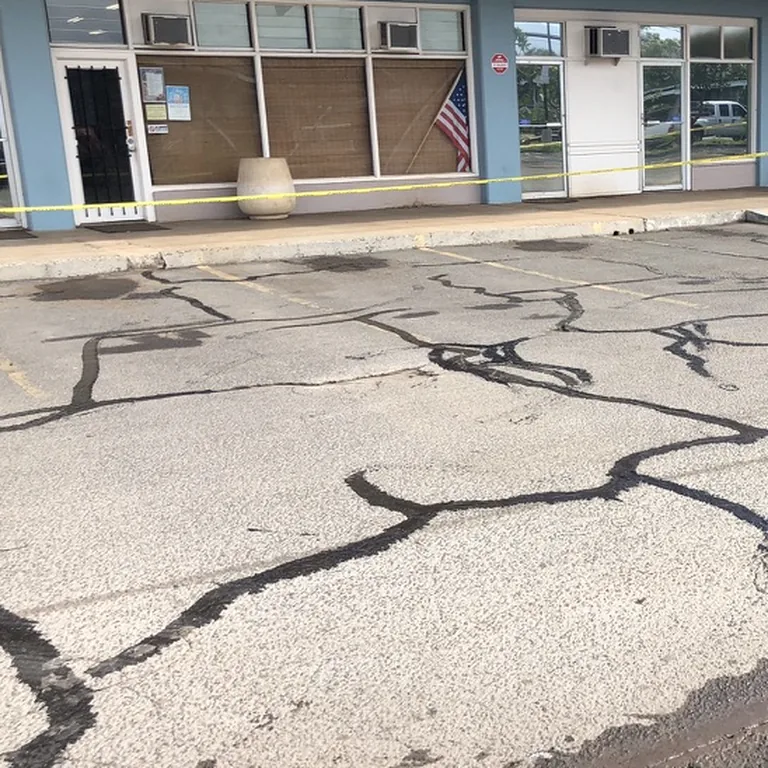
Recent crack sealing projects
Crack Sealing questions
What happens if I leave cracks alone?
Water weakens the base, and you end up with potholes, rutting and full-depth repairs that cost far more than sealing.
How wide does a crack have to be to seal?
Roughly a quarter inch to one inch is ideal. Hairline cracks are usually handled by seal coating, and wider failures may need patching.
How long does crack sealing last?
About 3 to 5 years or more, depending on weather and traffic.
What is the difference between crack sealing and crack filling?
Sealing uses flexible hot-applied material for long-term protection. Filling uses cold-applied material and is a shorter-term fix.
Should I seal coat after crack sealing?
Yes. Seal the cracks first, then seal coat, so the pavement is protected from the base up.
When is the best time to seal cracks?
Any stretch of dry weather. The cracks have to be dry for the sealant to bond.
Where we work
We provide crack sealing across Oahu, including Honolulu, Kapolei, Ewa Beach, Pearl City, Aiea, Kaneohe, Kailua, Mililani, Wahiawa, North Shore and everywhere in between.