What goes into a paving job
The black layer on top is the part everyone sees, but most of a pavement's life is decided underneath it. A stable subgrade, a compacted base course and the right slope for water to run off matter more than anything that happens on paving day.
We size the job to the load. A residential driveway, a townhome parking lot and a truck yard each get a different thickness and a different base, and your estimate spells out which one you are paying for.
Why Oahu Asphalt
- Itemized pricing
- Square footage, thickness, base work, hauling and labor are listed line by line, so you can see what you are paying for.
- 15+ years on Oahu job sites
- Run by someone who has operated the equipment, managed the crews and estimated the work.
- Built for the load
- Thickness and base are matched to how the pavement will be used, from family cars to delivery trucks.
- Driveways to full lots
- The same process whether it is a single driveway in Mililani or a shopping-center lot in Kapolei.
- Locally owned
- Based in Wahiawa and working island-wide.
What the work includes
- Site preparation
- Clean the subgrade or existing asphalt, remove debris and failed material, then proof-roll and compact.
- Base installation, if needed
- Place and compact aggregate base course and fine-grade it for drainage.
- Tack coat
- Apply asphalt emulsion so new asphalt bonds to the layer below.
- Asphalt placement
- Spread hot mix with a paver, compact in multiple passes with vibratory and static rollers, and match grades at transitions.
- Finish and quality check
- Check smoothness, compaction and drainage before the job is called done.
How it goes
Site visit
We walk the property, measure it and talk through how the pavement gets used.
Itemized estimate
You get a written, no-obligation estimate with every line item shown.
Preparation
Grading, base work and compaction.
Paving
Hot mix placed and rolled to the specified thickness.
Walk-through and cleanup
We check the finished surface with you and leave the site tidy.
Recent asphalt paving projects
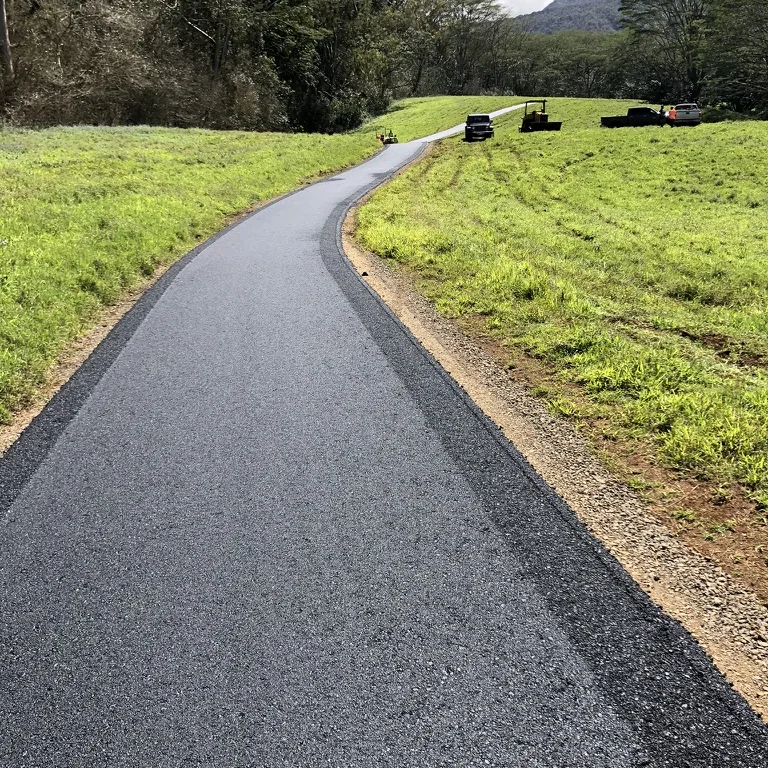
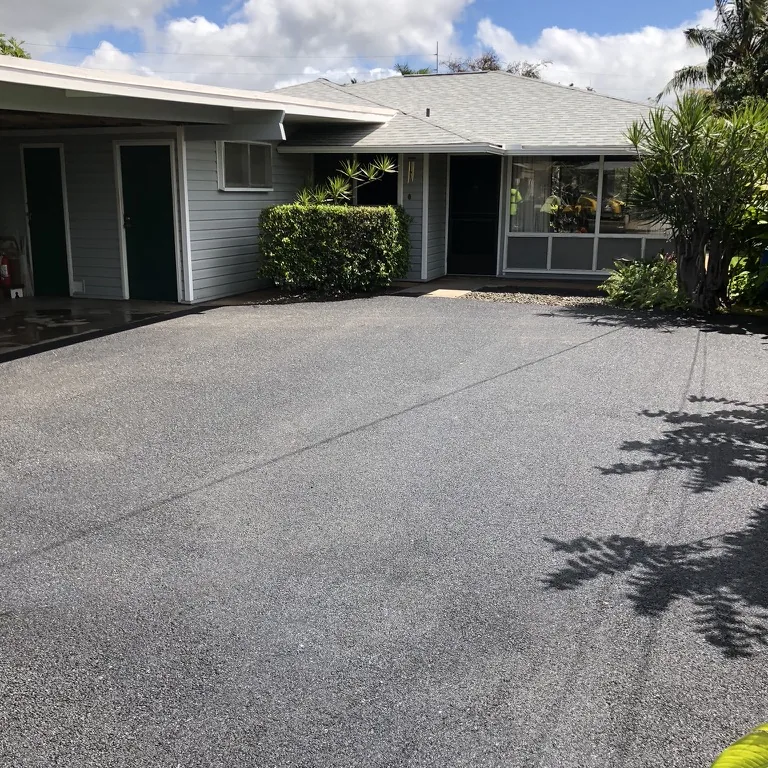
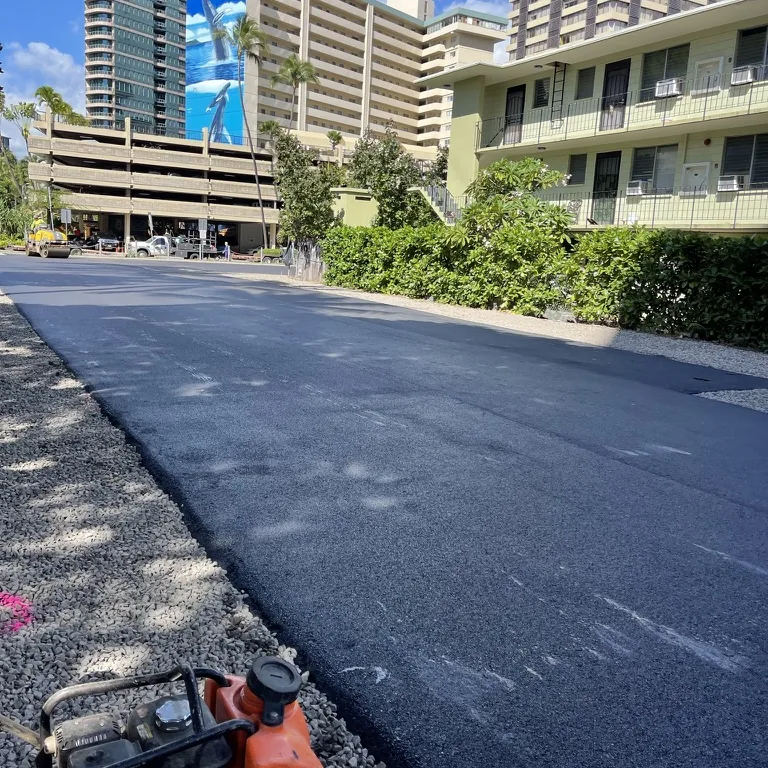
Asphalt Paving questions
How long does asphalt last in Hawaii?
A properly built asphalt pavement typically lasts 15 to 25 years. Traffic, drainage and upkeep such as crack sealing and seal coating decide which end of that range you land on.
How thick should the asphalt be?
Residential driveways are usually 2 to 3 inches. Light commercial parking lots run 3 to 4 inches, and heavy-duty or industrial areas need 4 to 6 inches or more.
When can I drive on new asphalt?
Light traffic is usually fine within 24 to 48 hours, depending on temperature, mix and compaction. Keep heavy trucks off for several days.
What makes new asphalt fail early?
Poor drainage, weak compaction, a subgrade that moves, or heavy loads before the pavement has cured.
What is the difference between paving and resurfacing?
New paving builds the full section: base and asphalt. Resurfacing, also called an overlay, adds a new layer on top of existing pavement after it has been milled or cleaned. If the base is sound, an overlay costs less.
What maintenance does asphalt need?
Seal cracks as they appear, seal coat every 3 to 5 years, and keep oil and debris off the surface.
Does rain affect paving?
Yes. Asphalt has to go down on a dry surface, so we schedule around the weather and will hold a job for a day before we pave in the rain.
Why asphalt instead of concrete?
Asphalt goes down faster, costs less to install and repair, flexes instead of cracking in slabs, and can be resurfaced when it ages rather than torn out.
Where we work
We provide asphalt paving across Oahu, including Honolulu, Kapolei, Ewa Beach, Pearl City, Aiea, Kaneohe, Kailua, Mililani, Wahiawa, North Shore and everywhere in between.